
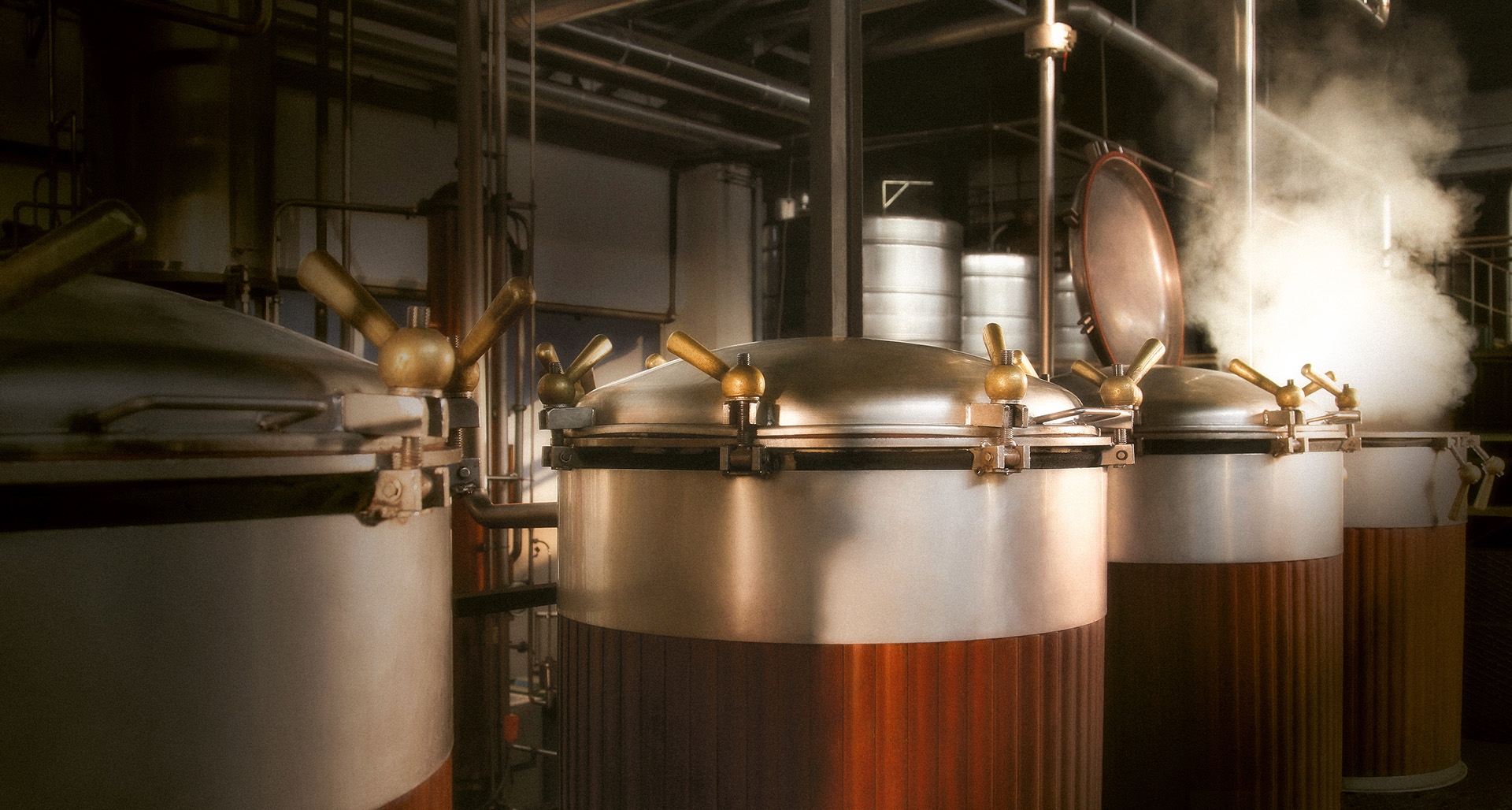
Grappa distillation is a tradition spanning centuries, tracing back to the earliest alchemists who first distilled grape pomace. From the 20th century onwards, significant advances in distillation techniques and raw material selection have elevated quality, culminating in today’s rigorous production standards. Furthermore, Grappa stands as a prime model of the circular economy, driving substantial reductions in carbon emissions through the sustainable reuse of winery by-products.
Raw material
Step one
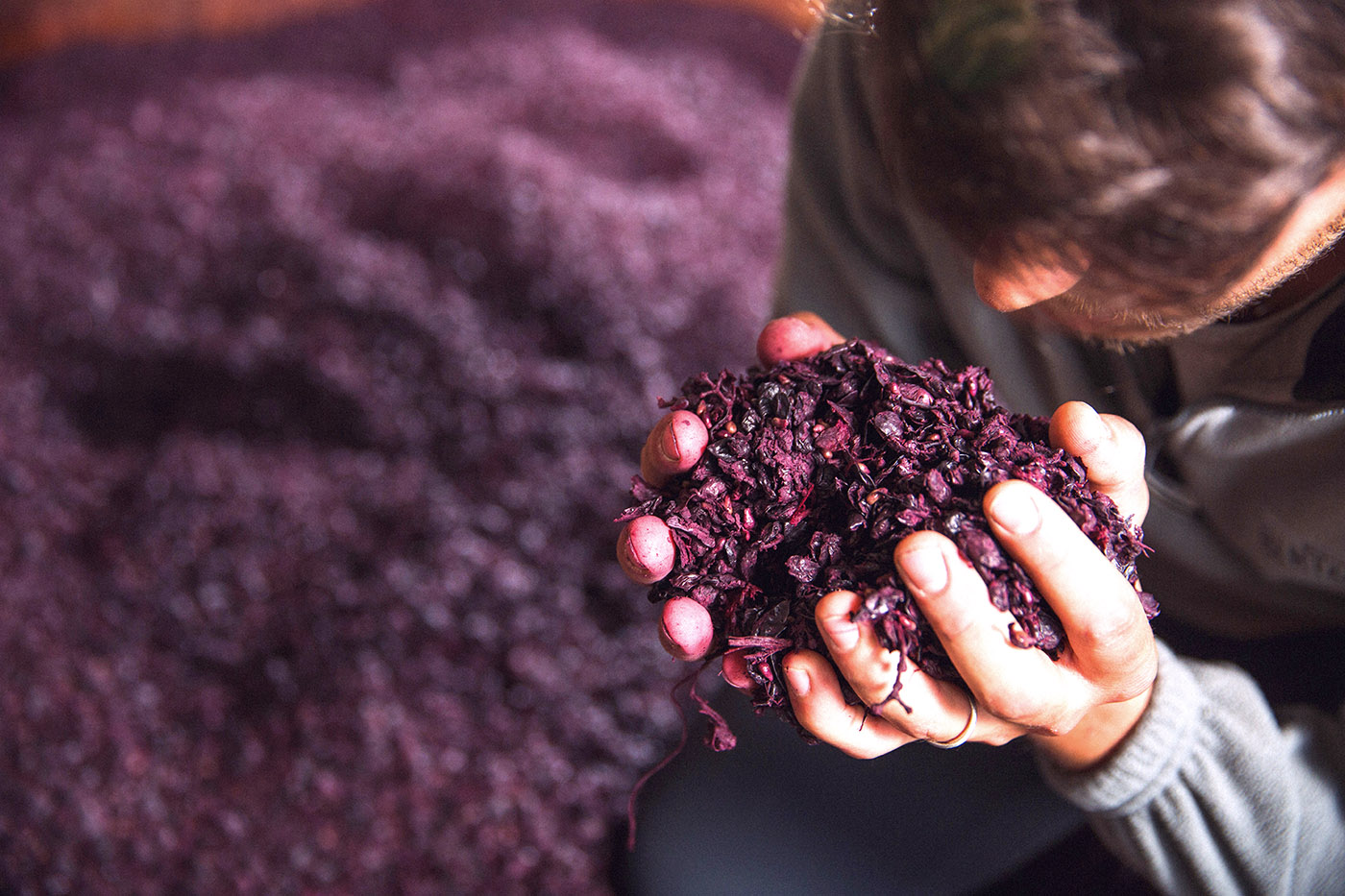
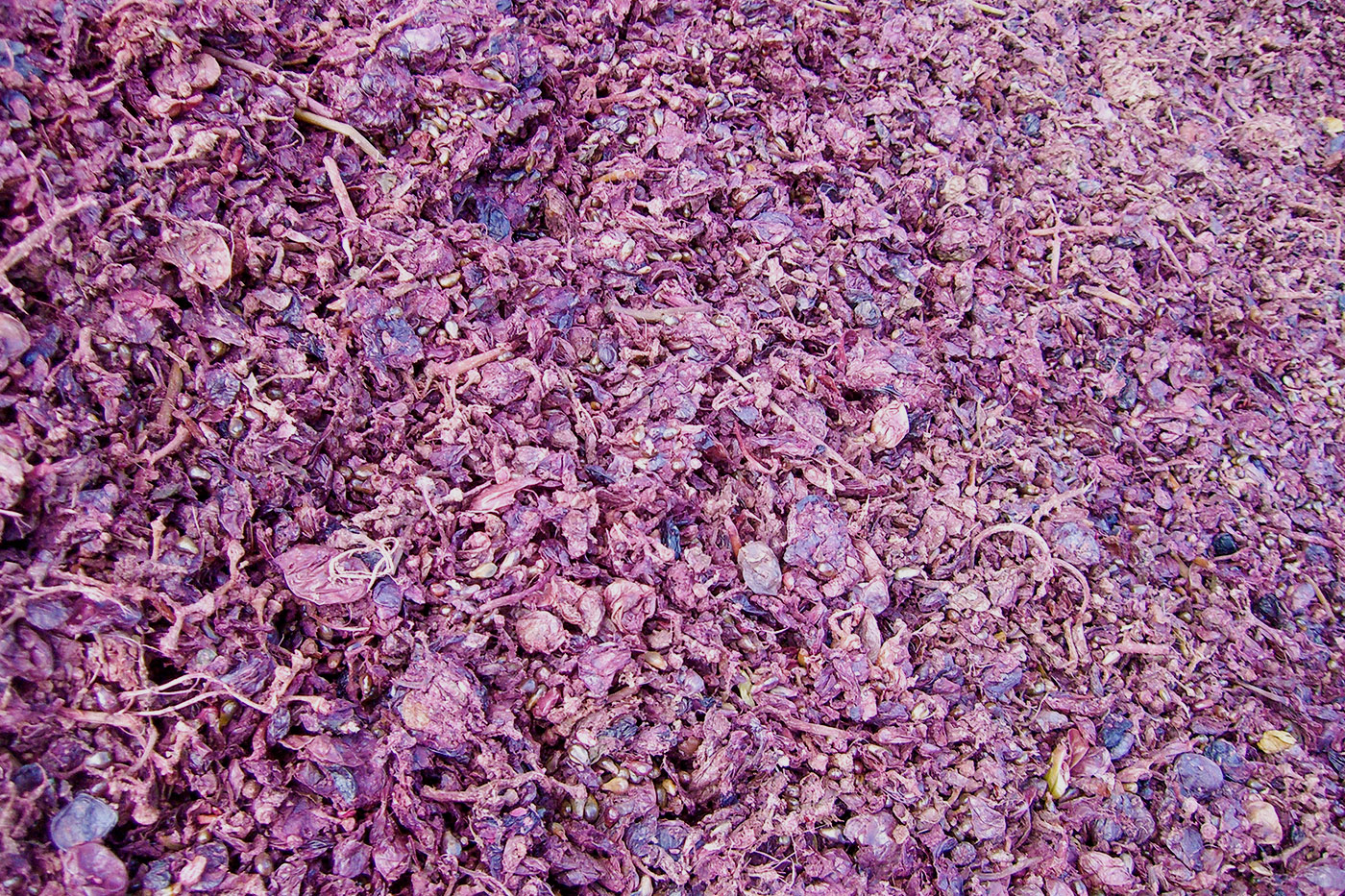
The distillation process is what makes Grappa so distinctive, as it derives directly from a solid raw material: grape pomace. Pomace comprises the solid components remaining after winemaking—primarily the skins and seeds. The skin holds the highest concentration of aromatic compounds, which the Master Distiller extracts during distillation.
The pomace used for Grappa must contain residual alcohol, which is created when yeasts convert the natural sugars in the grapes during wine fermentation.
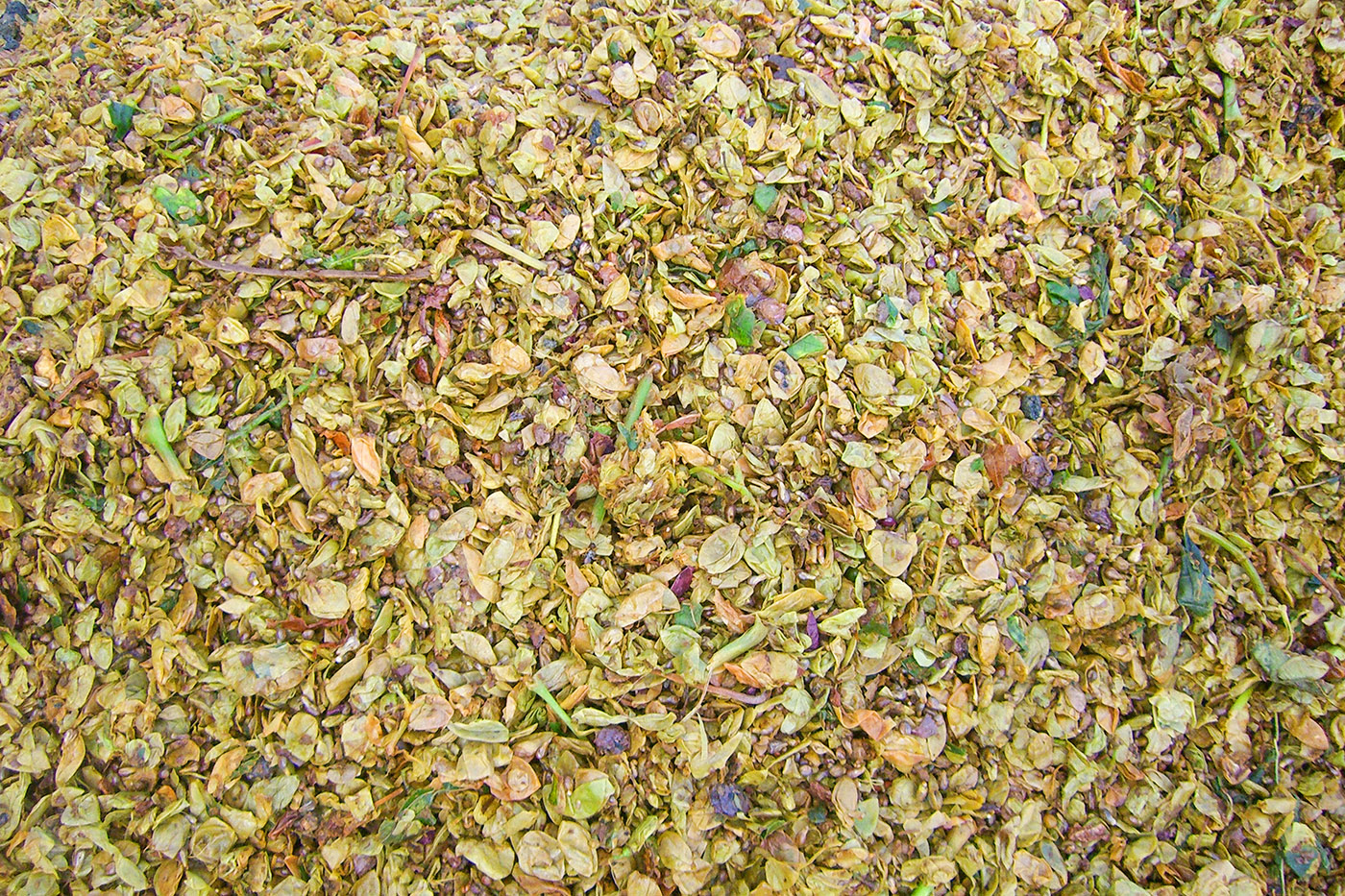
Pomace from red and rosé wine production is already fully or semi-fermented and ready for immediate distillation. Conversely, white wine pomace is termed ‘virgin’ as it has not undergone fermentation; Master Distillers must therefore ferment it before distillation can begin.
The distinct qualities of different grape varieties, combined with the Master Distiller’s craft, result in unique Grappas boasting remarkable character and a complex spectrum of aromas.
Distillation process
Step two
Distillation is a thermal process: by precisely heating fermented pomace alongside water or steam in alembic stills, Master Distillers vaporise and separate the various components before cooling them to recover the spirit in liquid form. Distillation may be continuous or batch-operated (non-continuous), with each method yielding a distillate with distinct characteristics. Ultimately, it is the Master Distiller’s artistry that elevates these processes to craft Grappa—the prestigious spirit of Italian tradition.


Batch Artisan Distillation (Non-Continous Distillation)
Batch alembic stills include:
- Steam-heated alembic stills
- Bain-marie (water bath) stills
- Direct-fire stills
The entire process is overseen by the Master Distiller, who possesses an intimate knowledge of both the raw material (grape pomace) and their craft equipment.
Once the still is loaded with fermented pomace alongside water or steam, the Master Distiller monitors the entire run, selecting only the ‘heart’ of the distillate while discarding the ‘heads’ and ‘tails’ to eliminate unwanted compounds.
The distillate then undergoes rectification to further refine its desirable aromas and purity. Distillation is a highly complex art, as identifying the precise cuts between each phase requires a degree of mastery held only by the most experienced distillers.
Continuous Distillation
Continuous distillation enables large quantities of pomace to be processed without interrupting the distillation cycle. The column still setup essentially consists of two primary components: the ‘analyser’ and the ‘rectifier’. The analyser column concentrates the volatile compounds from the pomace, while the rectifier column separates the individual components into heads, heart and tails.
Throughout the process, the Master Distiller carefully regulates temperatures to discard the heads and tails, capturing only the purest section: the ‘heart’. This central cut is the only portion selected to become Grappa.

From distillation to bottling
Step three
Lowering the alcohol content is essential to give the spirit a balanced taste and aroma. This process involves diluting the high-proof distillate with pure, high-quality water until the desired strength is achieved. Finally, chilling and filtration at low temperatures (between -15 °C and -4 °C) ensure Grappa’s crystal-clear colour and smooth, fruity character. At this stage, the distiller faces two main paths: bottling the spirit directly as ‘Grappa Giovane’ (young Grappa), or transferring it to oak casks to mature into ‘Grappa Invecchiata’ (aged Grappa).
Grappa Regulations & Certification
An Italian Heritage

Grappa is a Geographical Indication (GI) protected by European Regulations (EC) No 110/2008 and (EU) 2019/787. Its identity is inextricably linked to Italy—the land that imparts its unique characteristics. Under its strict product specification, Grappa must be produced entirely within Italian territory using grapes harvested exclusively in Italy.
The integrity of the Grappa GI is safeguarded by a structured Control Plan, which outlines mandatory checks for producers across every stage of the supply chain.
These controls systematically evaluate:
• Company documentation and traceability records
• The origin of raw materials
• Production and distillation phases
• The chemical and organoleptic profile of the finished spirit
This framework guarantees complete compliance with the product specification, preventing any unauthorised use of the ‘Grappa’ designation.
Control activities are overseen by ADM-Cert—the Certification Department of the Italian Customs and Monopolies Agency—designated by the Ministry of Agriculture, Food Sovereignty and Forestry as the official Inspection Body for the Geographical Indication ‘Grappa’.